Mediprobe Research Inc. | Seager Hair Transplant Centre - Part 2
22
Oct
2016

A New Hair Growth Therapy – PRP

Posted by

“Doctor, you don’t know what it is to doubt everything … you couldn’t with eyebrows like yours.” – Bram Stoker, Dracula

PRP (platelet-rich plasma) a.k.a. the vampire treatment is a hair growth therapy that is becoming increasingly popular. This hair growth therapy consists of two main steps; retrieval of plasma (main component of blood) and activation of platelets. During this therapy, platelets are obtained from drawn blood. Platelets are the key ingredient in this therapy as they contain growth factors that promote hair growth1,2. The platelets are then activated using manual techniques or automated devices and then injected into your desired hair growth areas3.

PRP treatments have been successfully used to treat male and female pattern hair loss as evident in a 2014 study4. In this study 13 male and female pattern hair loss patients treated with PRP reported a higher hair count and greater hair thicknesses as compared to their baseline values (p<0.0001 and p<0.0001, respectively). These improvements were found 3 months post treatment (1 session)4. Pain, post-treatment erythema and edema were some of the side effects reported in this study4.

PRP has also been used successfully in hair transplant surgeries5. Follicular units, when treated with PRP before being implanted, showed a 15.1% increase in follicular density as compared to untreated implanted follicular units in 20 male pattern baldness pateints5. An increased follicular density can help improve coverage and increase patient satisfaction.

The popularity associated with the vampire treatment can be attributed to the minimal side effects and low cost. PRP is not just a safe hair restoration option; research into its potential use in scarring, ulcers and wound healing have also occurred5. If you are interested in learning more about the vampire treatment, ask your hair loss specialist for more information.

Article by: Sarah Versteeg MSc, Mediprobe Research Inc. 

  1. Okuda K, Kawase T, Momose M, Murata M, Saito Y, Suzuki H, et al. Platelet-rich plasma contains high levels of platelet-derived growth factor and transforming growth factor-beta and modulates the proliferation of periodontally related cells in vitro. J Periodontol. 2003 Jun;74(6):849–57.
  2. Gupta AK, Carviel J. A Mechanistic Model of Platelet-Rich Plasma Treatment for Androgenetic Alopecia. Dermatol Surg Off Publ Am Soc Dermatol Surg Al. 2016 Sep 14;
  3. Arshdeep, Kumaran MS. Platelet-rich plasma in dermatology: boon or a bane? Indian J Dermatol Venereol Leprol. 2014 Feb;80(1):5–14.
  4. Kang J-S, Zheng Z, Choi MJ, Lee S-H, Kim D-Y, Cho SB. The effect of CD34+ cell-containing autologous platelet-rich plasma injection on pattern hair loss: a preliminary study. J Eur Acad Dermatol Venereol JEADV. 2014 Jan;28(1):72–9.
  5. Uebel CO, da Silva JB, Cantarelli D, Martins P. The role of platelet plasma growth factors in male pattern baldness surgery. Plast Reconstr Surg. 2006 Nov;118(6):1458–66; discussion 1467.
No comments »

20
Oct
2016

How to Categorize Your Hair Loss Using the Norwood Scale

Posted by

The Norwood scale (also referred to as the Norwood Hamilton scale) is a hair loss classification system that is commonly used to describe hair loss1. This scale is based on the typical hair thinning patterns found in men; hair loss starting at the temple and crown areas and progressing along the scalp2. There are 7 different hair loss stages that are described by the Norwood scale.

Type I: If your hairline recession is very limited you could be considered type I2.

Type II: Do you have a triangular hairline recession occurring? Individuals with a type II classification have limited hair loss which can be addressed using non-surgical or surgical options.

Type III: Symmetrical frontotemporal recessions are typical characteristics of a type III individual2. Topical therapy, oral therapy or hair transplants have all been successful in addressing this type of hair loss3.

Type IV: Individuals with a type IV classification typically have a hair bridge extending from the top of their scalp to areas of hair loss2. A severe hairline recession combined with limited hair in the vertex region accounts for this phenomenon. Hair transplants or medical therapies can be considered options for individuals with this type of hair loss.

Type V: If you have a bridge of hair, similar to the one described in type IV but is narrower and sparser, you might be displaying type V hair loss2. As there can be moderate amounts of hair loss associated with this classification a hair transplant is most likely your best remedy4.

Type VI: If you have moved passed the hair bridge stages and hair loss in your temporal and vertex regions have joined you are considered a type VI candidate1. Due to the large amount of hair loss associated with this classification, oral and topical hair treatments are not guaranteed to work. A hair transplant may be the best option.

Type VII: In this last stage of hair loss it is common to notice hair occurring along on the sides and back of the scalp, forming a horseshoe shape2. Individuals in this category have the highest amount of hair loss5. Hair transplants or non-surgical options such as a hair system are opportunities available for individuals with this type of hair loss.

If you don’t fit in any of these categories that’s ok. This scale meant to be a guide and does not include all possible hair loss patterns or conditions. The Norwood scale was made specifically for androgenetic alopecia and other scales have been created for other hair loss conditions such as the Ludwig scale for hair loss in women. To learn more about your hair loss and treatments available, ask your doctor for more information.

Article by: Sarah Versteeg MSc, Mediprobe Research Inc. 

  1. Norwood OT. Male pattern baldness: classification and incidence. South Med J. 1975 Nov;68(11):1359–65.
  2. Gupta M, Mysore V. Classifications of Patterned Hair Loss: A Review. J Cutan Aesthetic Surg. 2016 Mar;9(1):3–12.
  3. Berger RS, Fu JL, Smiles KA, Turner CB, Schnell BM, Werchowski KM, et al. The effects of minoxidil, 1% pyrithione zinc and a combination of both on hair density: a randomized controlled trial. Br J Dermatol. 2003 Aug;149(2):354–62.
  4. Yang C-C. Calvitron automated hair transplant system in alopecia treatment: a case report. Kaohsiung J Med Sci. 2003 Sep;19(9):470–5.
  5. Patwardhan N, Mysore V, IADVL Dermatosurgery Task Force. Hair transplantation: standard guidelines of care. Indian J Dermatol Venereol Leprol. 2008 Jan;74 Suppl:S46–53.
No comments »

19
Oct
2016

Free PRP & Laser Hair Therapy

Posted by

For a limited time only, all hair transplant clients who sign up within the next few weeks will receive the following items for free:

  • 1 Platelet Rich Plasma Treatment (a value of $1,500)
  • 3 Months of Laser Therapy (a value of $1,500)

This promotion will be available until the end of November (2016).

No comments »

11
Oct
2016

Minoxidil – Treatment for Hair Loss

Posted by

bald-742823_960_720

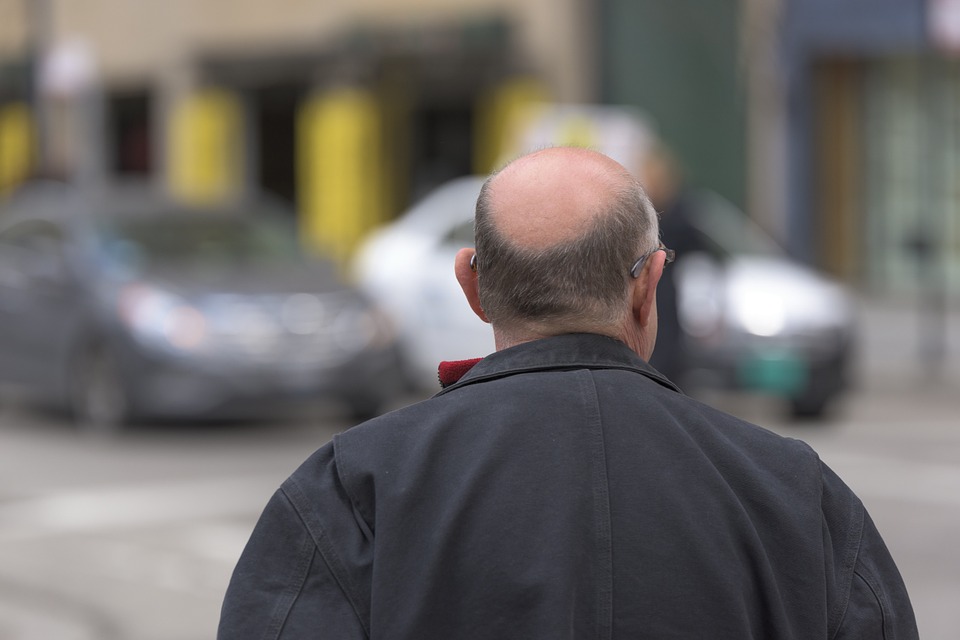
Androgenetic alopecia is a prevalent hair loss condition and is commonly referred to as male patterned baldness1. As its name suggests, this hair loss disorder occurs more frequently in men (70% prevalence) as compared to women (40% prevalence)1. Patients with this condition display miniaturized hair follicles, possibly caused by a genetic susceptibility related to the presence of certain hormones, preventing the follicle from producing hair2.

Minoxidil is an approved treatment for androgenetic alopecia3,4. Minoxidil is available as either a solution or foam and is applied directly onto the scalp. The foam application is the preferred option as minoxidil solutions can contain proplene glycol, a known skin irritant. This irritant can led to severe itching and/or dandruff5. Minoxidil solutions can also make your hair feel greasy and can make styling difficult5. Higher concentrations (5%) are desired as lower minoxidil concentrations (2%) require more frequent application (once a day application vs. twice a day application, respectively).

Both men and women can use minoxidil. Minoxidil (5%) treated women displayed higher amounts of hair (p<0.001), had greater  scalp coverage (p=0.001) and better patient assessment results (p<0.001) as compared to placebo treated women after 48 weeks of therapy7. Additionally, in men minoxidil foam can increase the average hair count as evident in a before-and-after trial8.  Minoxidil is also not associated with serious adverse effects. Non-serious adverse effects associated with 2% or 3% minoxidil treated patients are similar to placebo treated patients after 4 months of treatment6.

Minoxidil should be applied as prescribed since results may not be noticeable until 3 to 6 months of treatment is reached. If you have any questions or concerns when using this product, be sure to speak with your doctor.

Article by: Sarah Versteeg MSc, Mediprobe Research Inc. 

  1. Santos Z, Avci P, Hamblin MR. Drug discovery for alopecia: gone today, hair tomorrow. Expert Opin Drug Discov. 2015 Mar;10(3):269–92.
  2. Kaufman KD. Androgens and alopecia. Mol Cell Endocrinol. 2002 Dec 30;198(1-2):89–95.
  3. Product Monograph. Hair Regrowth Forumula. Minoxidil Topical Solution USP 20 mg/mL (2% w/v) [Internet]. Health Canada. Drug Product Database. 2016 [cited 2016 Oct 6]. Available from: file:///C:/Users/sversteeg/Downloads/PM00033538.PDF
  4. Men’s Rogaine. 5% Minoxidil Topical Aerosol. Hair Regrowth Treatment. [Internet]. U.S. Food and Drug Administration. 2015 [cited 2016 Oct 6]. Available from: https://www.accessdata.fda.gov/drugsatfda_docs/label/2006/021812s000LBL.pdf
  5. Blume-Peytavi U, Hillmann K, Dietz E, Canfield D, Garcia Bartels N. A randomized, single-blind trial of 5% minoxidil foam once daily versus 2% minoxidil solution twice daily in the treatment of androgenetic alopecia in women. J Am Acad Dermatol. 2011 Dec;65(6):1126–34.e2.
  6. Spindler JR. The safety of topical minoxidil solution in the treatment of pattern baldness: the results of a 27-center trial. Clin Dermatol. 1988 Dec;6(4):200–12.
  7. Lucky AW, Piacquadio DJ, Ditre CM, Dunlap F, Kantor I, Pandya AG, et al. A randomized, placebo-controlled trial of 5% and 2% topical minoxidil solutions in the treatment of female pattern hair loss. J Am Acad Dermatol. 2004 Apr;50(4):541–53.
  8. Hasanzadeh H, Nasrollahi S, Halavati N, Saberi M, Firooz A. Efficacy and safety of 5% minoxidil topical foam in male pattern hair loss treatment and patient satisfaction. Acta Dermatovenerol Alp Pannonica Adriat. 2016 Sep;25(3):41–4.
No comments »